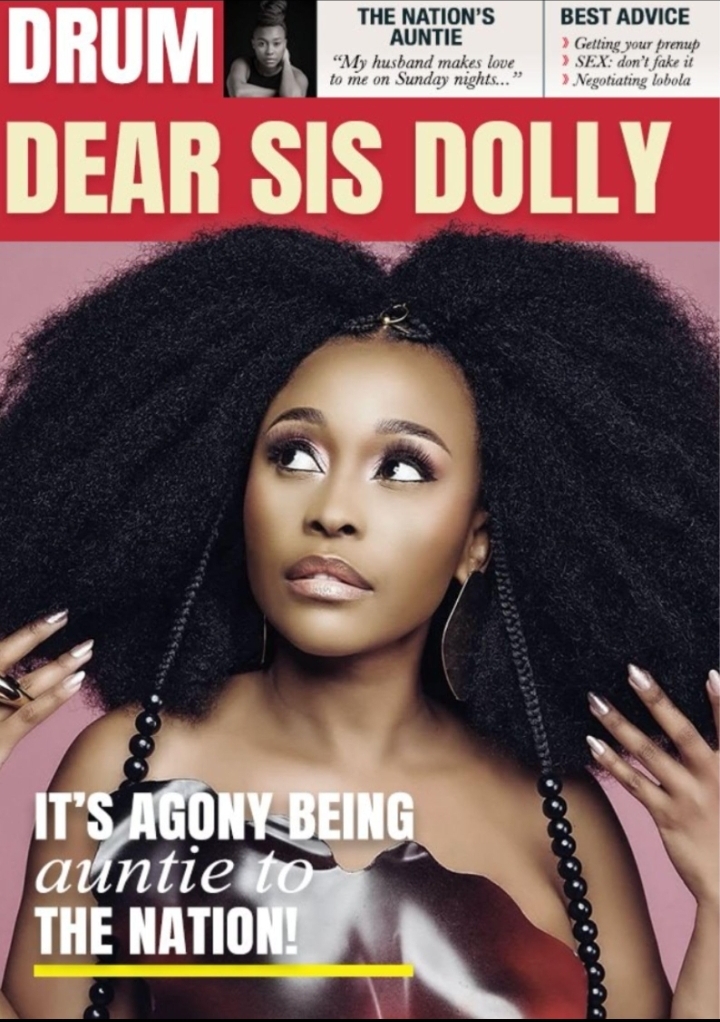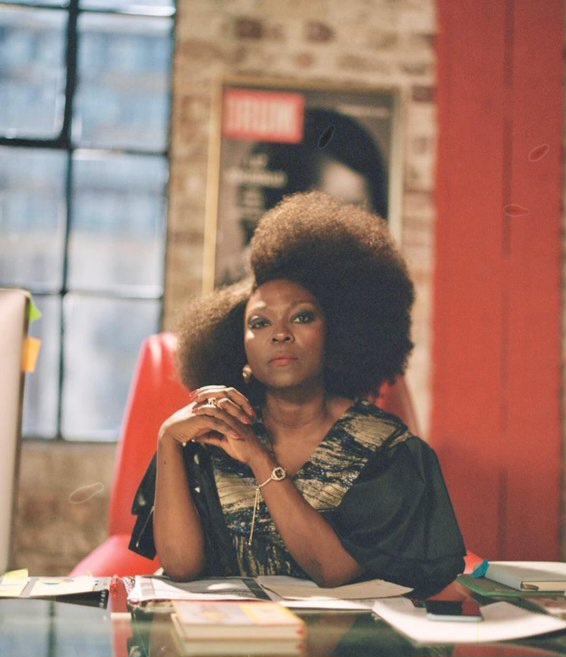

Dear Sis Dolly hits Ster-Kinekor and Nu Metro theaters nationwide on July 3, 2026. This family comedy-drama is inspired by the iconic Drum Magazine advice column. It follows Khethiwe, an idealistic psychologist competing to become the publication's next Sis Dolly—she's hoping to save her struggling community mental health center.
S'Thandiwe plays Melody Makaringe, Editor-in-Chief at Drum. It's a big role for the veteran actress—'Sis Dolly' is like a respected Auntie who always gives solid advice to the nation. We talked with her about it.
MUZI: Congrats on the new project! What drew you to this story?
STHANDIWE: When I saw "Sis Dolly," I was thrilled. My agent sent the brief and invited me to audition—I wanted it badly. It's an editor-in-chief role at Drum magazine, an institution. I immediately thought, "I need to be part of this."
MUZI: Drum makes me think of Black success and excellence. We've discussed this before—you know I'm all about Black excellence. What does it mean to you?
STHANDIWE: Beautiful question. For me, Black excellence is preserving everything good about us—our stories, what we create, the best of who we are. The creative industries capture all of it. Our fashion, products, stories, how we carry ourselves, our work ethic, our values—all that goodness is Black excellence.
MUZI: How important is telling this story now? Times have changed. Magazines aren't what they were—everything's online. Who are you telling this story to?
STHANDIWE: We're telling it to everyone, young and old. Sure, we've gone digital, but that doesn't erase what Dear Sis Dolly stood for. Going digital doesn't mean everything else dies, right? That would mean saying we don't need therapy, health education, or reflection anymore—and that's what the column represented. People would flip straight to it.
I hope this film inspires someone to ask, "How can we bring this column into 2026?" People still deal with depression, anxiety, raising teens, workplace bullying, marriage issues—all of it. Dear Sis Dolly covered that. She was a safe space where you felt, "If I write to this person, they'll actually hear me and respond."
I'm hoping the film shows how important that column was and can still be if we reimagine it.
MUZI: I'm excited for the film. Not to be negative, but it's going to cinemas. Are you confident people will actually go? Do people still do that? I can't remember my last theater visit.
STHANDIWE: This is different. It's a feel-good story—light and uplifting. Yes, there are sad moments, but there's always reconciliation and closure. I think we need to bring back that culture. Having access to stories on our laptops is great, but it isolates us. This is a chance to gather a group and say, "Let's go to the movies."
We used to love discussing movies afterward—sitting somewhere and breaking it all down. Now it's usually someone talking to a camera asking for reflections. Imagine doing that as a group again. Let's bring that back. It makes us more community conscious. The producers made a smart choice with theaters.
MUZI: Finally, you've had an incredible journey—maybe some ups and downs—but you're a Black success story, a symbol of excellence. How do you want to be remembered?
STHANDIWE: Exactly like that. Here lies Sthandi, who tried her best in everything. She literally gave her all and put her best foot forward.
In everything I do, I'm conscious. Every time I step on set, I never think, "I've been doing this for how many years?" I still have that childlike wonder about everything..
I'm always aware of people, and I'm really excited about the world. That influences who I am as a person and what I give. Even in my characters, I hope I never come across as the same person because no two people are the same.
So I hope to be remembered as that person who tried—who gave it my best.